
Supreme Court Pushes for Blockchain-Based Land Records to Curb Property Disputes
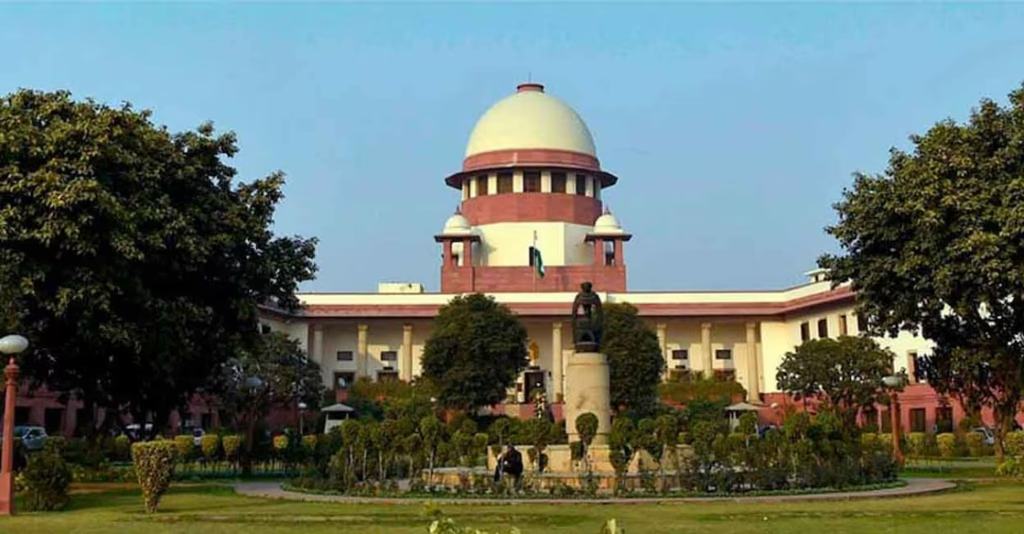
Property disputes have long plagued India’s judicial system, consuming time, resources, and creating uncertainty for millions of citizens. In a landmark observation, the Supreme Court has urged both the Centre and State governments to digitise land records using blockchain technology. The move is aimed at ensuring transparency, security, and reliability in property ownership data.
Why Blockchain for Land Records?
Blockchain is a decentralised digital ledger that records transactions in a secure, tamper-proof manner. Applying this to land records offers several advantages:
- Transparency: Every transaction is visible and verifiable, reducing chances of fraud.
- Security: Once data is entered, it cannot be altered, preventing manipulation of ownership records.
- Efficiency: Streamlined processes can cut down delays in property registration and dispute resolution.
- Accessibility: Citizens can easily verify ownership details without relying on intermediaries.
The Current Challenge
India’s land ownership system is often fragmented, with records maintained manually across different departments. This leads to:
- Multiple claims on the same property.
- Missing or outdated records.
- Lengthy litigation processes.
By adopting blockchain, the government can create a single source of truth for property ownership, drastically reducing disputes.
Supreme Court’s Vision
The Court highlighted that recurring property disputes clog the judicial system and affect economic growth. Digitisation through blockchain is seen as a long-term solution to modernise governance and protect citizens’ rights.
Leave a Reply